
https://iclfi.org/pubs/wh/257/palestine
Organised by the Revolutionary Communist Group (RCG) and the Partisan Defence Committee, a webinar titled “Free Palestine! Fight state repression!” took place on 1 March, featuring a range of activists targeted for championing Palestinian liberation. Speakers included Momodou Taal, a PhD student at Cornell University in New York; Sarah of the SOAS 2 in London; Charlotte Kates of Samidoun: Palestinian Prisoner Solidarity Network, which has been proscribed in Canada and elsewhere; Riverway to the Sea lawyer Frank Magennis; and a representative of the German-based Palestine on Trial. Below we print the speech by the PDC’s comrade Kat.
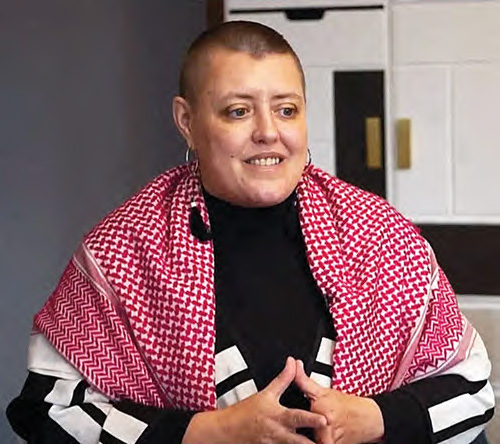
Charlotte Kates, Samidoun.

Momodou Taal, Cornell student activist.
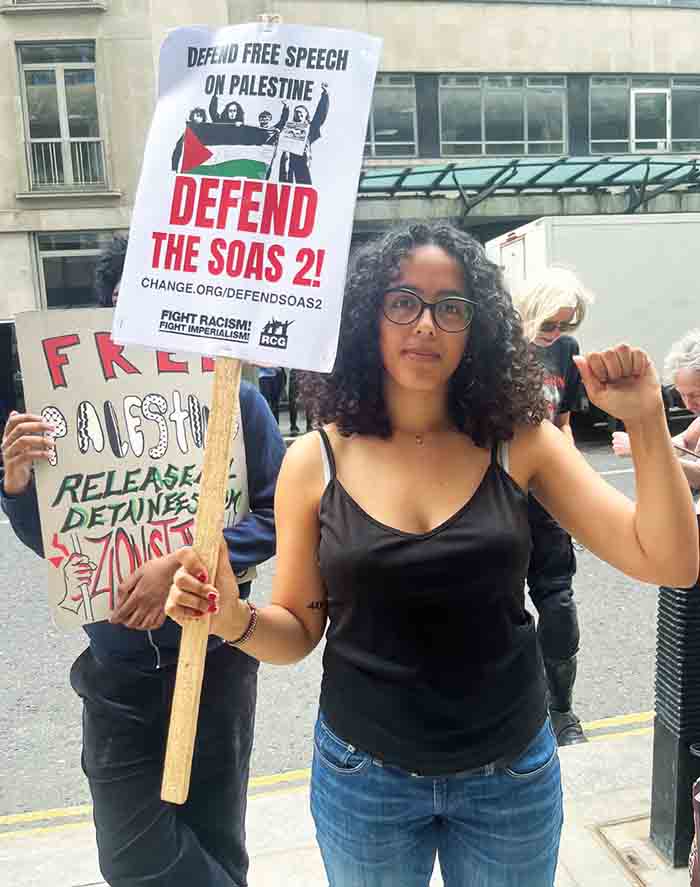
Sarah of SOAS 2.
First off: our solidarity with the other presenters on this panel and your struggle for the cause of Palestinian freedom, often at great personal cost. To comrades not familiar with the Partisan Defence Committee, I’d like to introduce ourselves. The PDC was initiated by the Spartacist League/Britain in the late 1980s with the aim of uniting all forces willing to cooperate in the defence of those who are being persecuted for their activities carried out in the struggle for the class interests of workers and the oppressed. I’d like to motivate this perspective a bit today.
As we are all too aware, right-wing reaction is on the rise and Starmer’s Labour Party is ratcheting up repression. The primary target of arrests in the recent period has been pro-Palestinian protesters, from the anti-Elbit activists to the RCP and comrades of the RCG as well as the various independent journalists and others who have also been targeted. They are among the many who have shown enormous courage and dedication to the cause of Palestinian liberation.
Yet we see that the left in particular clings to the old ways where each group mobilises mainly its own members, on its own turf and with its own methods, when they are being targeted. This is not a tenable strategy to effectively push back against the forces of repression and strengthen the workers movement.
We agree with many of the RCG’s criticisms of this method, and we also agree with your perspective of appealing to broader forces in the face of the very serious charges your own comrades are facing. Today’s discussion is a good example of working to overcome the deeply entrenched sectarianism of the left. While many of us are familiar with the slogan “an injury to one is an injury to all”, it is not in reality how the struggle against repression is being conducted. With repression only set to increase and broaden, there is an urgent need for united-front campaigns as a step towards building a broader organisation for defence work that can spring into action no matter who is being targeted and that reaches across the workers movement and beyond political divisions.
But to build such a united-front organisation we have to confront head-on the sectarianism of the left. Our task is to take these criticisms into the socialist movement and build a pole that can break through the sectarianism by showing in action that we are stronger together in defence of our democratic rights than when we are fighting separately. This doesn’t imply at all that we agree on every political question. But we must fight as one against repression intended to weaken all of us.
I appreciate that today’s speakers are contributing to this discussion from different international experiences. So, I’d like to speak to what’s happening in Britain. Starmer’s government has pursued a vicious campaign of repression against pro-Palestinian activists because opposing Israel’s genocide of the Palestinians is a big red line for British imperialism. I think we all know this. But there are many people in this country who don’t support the government’s foreign policies, as shown by the hundreds of thousands who have taken to the street week after week, including many of us here.
But we must be honest with ourselves and recognise that these marches have not had a decisive impact on stopping the horrors. The main reason for this is that the leadership of the movement has sought to contain the politics of the protests to what is acceptable to the Labour Party and the establishment, hosting the likes of Diane Abbott, John McDonnell and other such dignitaries. When you unite with representatives of the government that is supporting Israel and jailing the ones who oppose the genocide, how can you then fight this repression!
Comrades in the RCG have rightly and, might I add, often quite effectively denounced the Palestine Solidarity Campaign and Labour politicians for exactly this reason. What this means for us, then, is that building a broad defence organisation goes hand in hand with building a revolutionary pole against the liberal leadership in the Palestine movement. We have to do both things: fight for the broadest possible unity in action for defence work and provide an alternative strategy for the Palestine movement against its liberal leadership.
Lastly, we must fight for the workers movement to unite in action in defence of the victims of repression. But union leaders like Sharon Graham, Andrea Egan and Eddie Dempsey and many before them have overseen the hollowing out of the union movement. Working within the unions to mobilise for united-front defence in opposition to their leadership is a crucial aspect of strengthening the workers movement as a whole for the battles ahead, including against imperialism itself.
Such defence work has a long tradition in the workers movement, and we take our inspiration from the Comintern and the work of the American International Labor Defense (ILD). I’d like to end my remarks by quoting James P Cannon, one of the founders of the ILD, who in 1926 made the very simple yet powerful point that “The victory of the class-war prisoners is possible only when they are inseparably united with the living labor movement and when that movement claims them for its own, takes up their battle cry and carries on their work.” Defend all pro-Palestinian activists! Free Palestine! Thank you, comrades.