
https://iclfi.org/pubs/wh/257/kagar
The Modi government launched Operation Kagar (Hindi for “brink”) in early 2024 and set itself the deadline of 31 March 2026 as “the last day of Naxalism”, the popular term for Maoism in the Indian subcontinent. Anywhere between 60,000-100,000 security personnel, from police to special forces, are deployed in and around the dense forests of Chhattisgarh and Telangana, states with vast mineral reserves and home to Adivasis, or tribal people, Dalits and other oppressed groups in the country.
Operation Kagar marks the latest and most aggressive offensive against Maoism in India. The Indian state has wanted to eliminate Maoism ever since the Naxalbari uprising of 1967 planted red seeds of liberation in the hearts of millions of peasants and other downtrodden people. Successive governments have launched military operations to crush Naxalism, going right back to Operation Steeplechase in the 1970s under Indira Gandhi, India’s own Iron Lady. In 2005, one year after the Maoist forces regrouped under the Communist Party of India (Maoist), Congress Prime Minister Manmohan Singh characterised Maoism as the “greatest internal security threat” to India and continued the state’s offensive, first by backing local vigilante groups in the extralegal terror campaign called Salwa Judum, and then under the official auspices of Operation Green Hunt in 2009.
One thing must be made clear: the state’s assault on the Maoists is a cover for removing all obstacles to ravaging the natural resources of the country by seizing the lands of Adivasis, Dalits and other oppressed peoples. When the mining companies want to expand their operations into the forest heartlands, they displace hundreds of thousands and brazenly murder those who resist and defend their lands by branding them “Maoist terrorists”. This has been the playbook for decades. Thus, Operation Kagar is a blank cheque for the state to repress anyone who resists its agenda. The only difference is that it’s a licence to kill in the forests, whereas for the “Urban Naxals”, it means prolonged ordeals in prison and the courts.
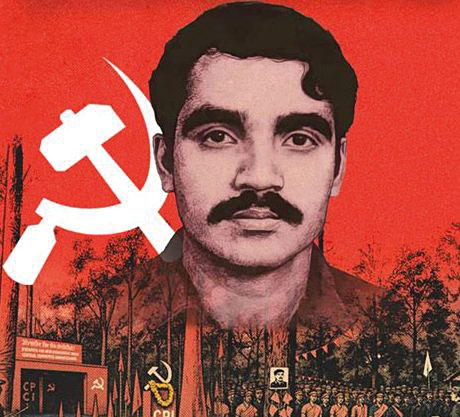
Basavaraju, Communist Party of India (Maoist) general secretary, murdered last year by Indian state.
Since the start of Operation Kagar, state forces have assassinated several top leaders of CPI (Maoist), countless party cadre and ordinary Adivasis and Dalits. Most notable among these was General Secretary Nambala Keshava Rao, aka Basavaraju, who was killed in an “encounter” in May 2025 after spending 40 years entirely underground. The CPI (Maoist), or at least factions within it, are calling for talks, but the government, sensing the weakness of the movement, forges ahead in its killing spree. A somewhat steady stream of surrenders continues, from leadership and cadre alike.
The Maoist movement is today the weakest it has ever been. This claim is strongly rebuffed by many aligned with the movement, as they see it as an attack or as buying into the state’s propaganda. But this is a statement of fact. Denying this won’t help; only by recognising reality can we begin to deal with problems of strategy and put the movement in a better defensive position. The movement has gradually weakened over time as a combined result of being slowly ground down by the state, as well as a political strategy which was unable to extend its reach beyond the forest heartlands of the country in any meaningful way. The latter increased the movement’s isolation from the masses of the country and thus reinforced its vulnerability and weakness in the face of the state.
The five parliamentary communist parties—the CPI, CPI (Marxist), CPI (ML)-Liberation, Revolutionary Socialist Party, and All India Forward Bloc—issued an appeal on 9 May 2025 to Modi calling for a halt to the government’s killings and demanding an “impartial judicial enquiry” instead! This is a complete embarrassment and a betrayal. The Maoists are guilty of nothing but fighting to defend the oppressed. If these parties had a backbone and confidence in their own programmes, they would mobilise the millions in their trade unions and other organisations to demonstrate the united strength of the left. But they act no differently than human rights and civil society organisations, revealing the rot of official communism in India.
The current state of affairs is a problem not just for the Maoists, but for the entire communist movement and the masses of India in general, because it is about the fight to defend jal, jangal and jameen (water, forest and land). We Trotskyists stand together with the heroic fighters in the heartlands of India who have been suffering bloody repression, and call on the communist movement to come to their defence by mobilising their trade union and peasant organisations.
For a united front of the Indian left to defend Maoists!
Workers of India: demand an end to Operation Kagar!
Lal Salaam to the fallen heroes!
Jal, jangal, jameen hamari hai!