
https://iclfi.org/pubs/bh/27/ccop
For black people in America, it should be a basic right to be able to wake up and start your day without the looming fear that a chance encounter with a cop could make it your last day living. Or to be driving and see flashing lights in your rearview mirror and not have your heart stop for a moment. Police brutalize and kill black people with impunity on a daily basis in this country. They are three times more likely to be killed by the police than whites—and twice more likely than Latinos. Instances of killings by the police have been on the increase nationally. As the murders of Renee Nicole Good and Alex Pretti show, vicious state repression is not limited to black and brown people. With Trump’s threats of sending in the National Guard to occupy major cities and ICE and border patrol besieging immigrant communities, the victims of state torment will only continue to increase.
The desire to have control over whether you or your loved ones become the next fatal statistic is not only reasonable and just but urgent. For many, the demand for community control of the police embodies just that sentiment. For decades, this demand has been raised by the left as a way to fight police repression. It was a rallying cry for many who took to the streets under the banner of BLM in 2020 after the murder of George Floyd. But today, black people are no closer to being in control of anything, let alone the police, who rampage through their neighborhoods and commit brutal violence on the regular. This is itself a reflection of the brutal reality of capitalist society where black people are forcibly segregated at the bottom. Even worse, protests against police brutality have all but dried up.
One of the few groups on the left that has continued to show up and fight against cop terror is the Freedom Road Socialist Organization (FRSO) and in particular their organization, the National Alliance Against Racist and Political Repression (NAARPR). In our work to rebuild the movement against police terror through the campaign to Open the Police Archives and expose liberal politicians as an obstacle to this cause, we have frequently run into the FRSO. On occasion, we have worked with them together with families of victims of police terror. One of the most frequent debates that we have with members of the FRSO and NAARPR is over the question of community control of the police.
The aspiration of black communities to control the cops who patrol their streets is not inherently detrimental to the black struggle, but how it has been fought for is. But this raises a big question: How to go from the reality of the situation we are in now to one where cops actually take their orders from the black community?
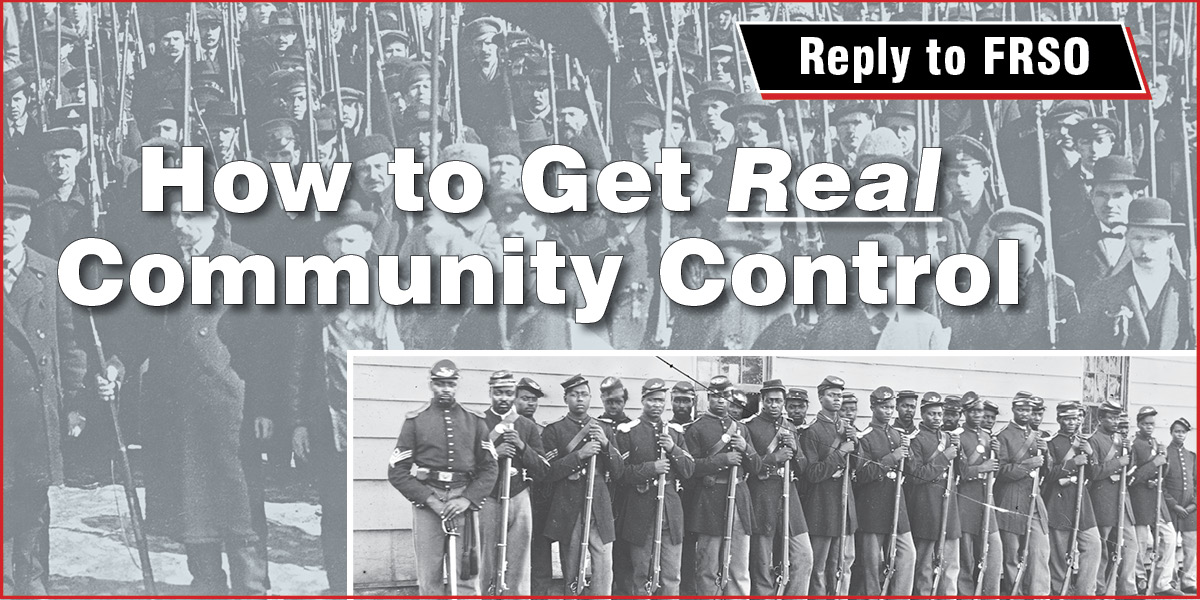
The pamphlet that members of the FRSO and NAARPR have provided us to explain how to fight for community control is Frank Chapman’s The Historical Roots of Our Struggle for Community Control of the Police. There are two basic approaches to the fight for community control. The first, which Chapman takes, is to attempt to realign the existing police force and bodies of armed men to be partisans of the inner city and responsive to its concerns—to try to get the existing state forces to switch their allegiance from the ruling class to black people.
The second approach, which we advocate, is to look to build up an alternate force that has its interests aligned with the black population and the multiracial working class from the outset. It would aim to step in and take the place of the existing bodies of armed men when the balance of forces allows. To get a police force controlled by the black community, you need an alternative power to take over from the capitalist state.
The difference here is whether you are seeking to convert the existing police forces or to replace them. If you understand that you have to replace the cops from top to bottom, then it is necessary to maximize the fighting strength of our side and turn to the primary social force that has a vested interest in doing so alongside black people and other oppressed minorities—the working class.
What makes Chapman’s essay appealing to young revolutionaries is that he states some basic Marxist truths: “We see the police as not only instruments of class exploitation and protectors of private property; we also see them as perpetrators of racist and political repression and part of the state apparatus enforcing national oppression.” OK, but if one understands this to be the case, why advocate for the black community to become embroiled in the existing state apparatus as he later goes on to do? The conclusion that needs to be drawn from the above quote is that there is no gain to be won for black and working people in collusion with the capitalist state or capitalist politicians.
Chapman himself correctly warns against getting “lost in a maze of fantasy about reimaging policing in a class ridden, racist, sexist society”—only to go on to push legislative efforts to reimagine policing in deeply class-divided and highly segregated Chicago. This reimagining is not the road to revolution but to ruin for the black struggle.
Finish the Civil War!
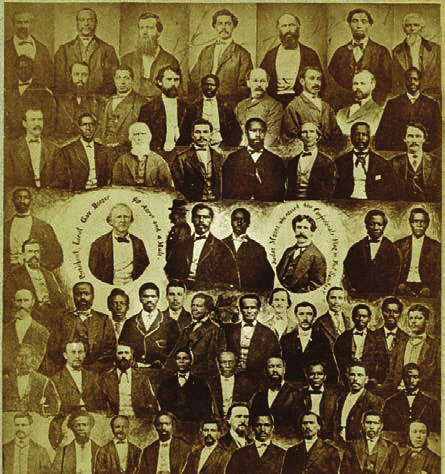
Radical Reconstruction, most democratic era in U.S. history, was only made possible by Civil War and armed occupation. Above: Montage of majority-black Reconstructed South Carolina legislature, distributed by white supremacists to fuel reaction. Below: Drawing of black people voting in South, 1867.
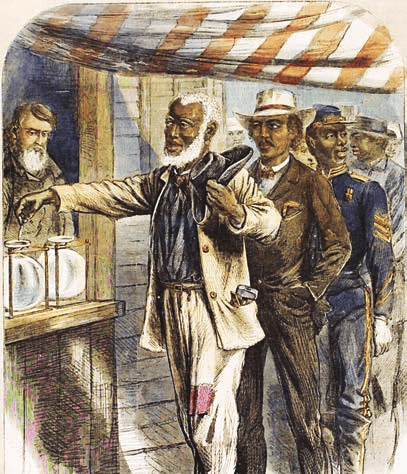
Chapman begins his essay by claiming that the activity of the NAARPR stands in the tradition of Radical Reconstruction, the Russian Revolution, the Panthers and more. In fact, what these historical examples show is why the capitalist state must be replaced and that any compromise on this question will only set the struggle back. The same goes for any perspective that does not actively try to align the black struggle with that of the working class.
It is fitting that Chapman finds inspiration in Radical Reconstruction, the most democratic period in U.S. history to date and one rich in lessons. First and foremost, this period was made possible by a social revolution—the Civil War. The black regiments of the Union Army were crucial to turning the war’s tide and smashing the slavocracy. In the process, the old system of policing based on slave patrols to enforce chattel slavery “was overthrown by revolutionary means” as Chapman puts it and a new system of policing erected in its place.
These momentous events shed considerable light on which of the two basic approaches to achieving community control of the police has a chance of success—and which doesn’t. New slave catchers had not been hired at the initiative of black people—nor had the purpose of their patrols been gradually transformed into defense of the black community. Rather, these bodies of armed men were destroyed by an alternate force, the Union Army. In short, the previous police apparatus was not converted, but replaced.
There was more to the story, though, because at the end of the day the Union Army was the instrument of Northern capital, not the black masses. Something was going to have to give. Both capitalist and slave had much to gain from the suppression of the plantation owner but had no further common interests. It was the black masses themselves who, under the protective shield of the occupying Union Army, pushed forward the social revolution. As Chapman documents, a degree of black community control was gained in this period. But in 1877, the capitalist masters withdrew the troops from the South for their own purposes. At that point, the heroic freedmen and women did not have the independent strength and organized militias to withstand the ensuing tide of racist reaction. So, counterrevolution took hold. In other words, Radical Reconstruction showed the need to cohere bodies of armed men distinct from those commanded by the ruling class to fully win black freedom.
How to Seize Power
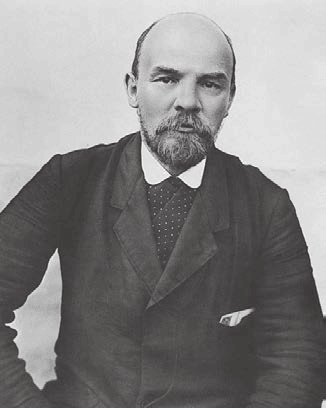
Bolshevik leader V.I. Lenin in August 1914.
Chapman cites the 1917 Bolshevik Revolution as evidence of the “historic fact that policing can be used to defend the democratic gains of the people.” But again, he skips over its lessons for the black struggle today. This revolution was powerful confirmation that workers and the oppressed are capable of taking control of society and running it in a much better way and for the benefit of their communities.
Under the leadership of the Bolshevik Party, the working class seized power in its own name and fought to extend the revolution internationally, liberating the broad masses from all forms of slavery and exploitation. The old order was toppled, but not because the security forces loyal to the capitalist Provisional Government were converted to the side of the insurgent working class. Rather, it was because the soviets (councils of workers and peasants) built up independent forces, the Red Guard detachments and later the Red Army, to replace them at the decisive moment.
During the whole period, from the tsar’s overthrow in February to the triumph of the working class in October, Lenin focused on strengthening the soviets and their Red Guards as an alternative to the existing government and its security forces. The objective was to get the working and toiling masses to assume an independent attitude toward the capitalist class and concentrate as much power as possible in their hands, even while the official state machinery was still attempting to enforce the commandments of the old regime. This was absolutely indispensable preparation for a successful revolution.
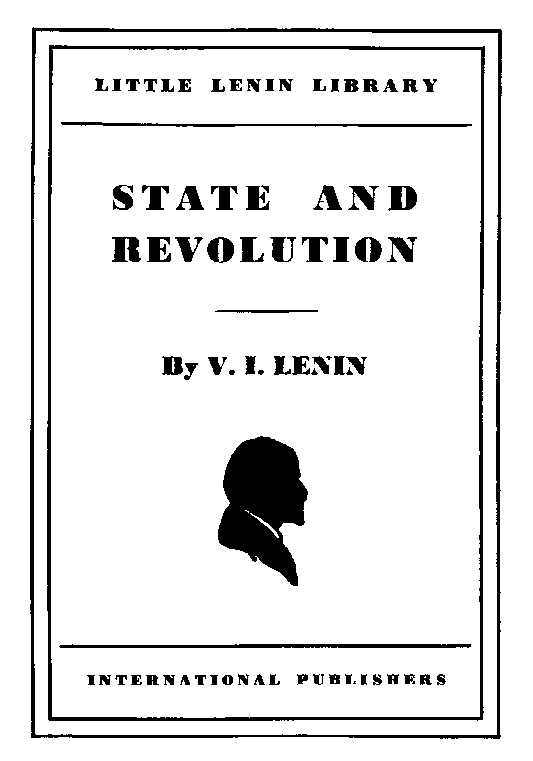
State and Revolution defends basic Marxism; the capitalist state must be smashed and replaced by workers’ rule.
One of the things that Lenin hammered on was the utter futility of ever converting the capitalist police into defenders of the oppressed masses:
“Separated as it is from the people, forming a professional caste of men trained in the practice of violence upon the poor, men who receive somewhat higher pay and the privileges that go with authority (to say nothing of ‘gratuities’), the police everywhere, in every republic, however democratic, where the bourgeoisie is in power, always remains the unfailing weapon, the chief support and protection of the bourgeoisie. No important radical reforms in favor of the working masses can be implemented through the police. That is objectively impossible.”
—“They Have Forgotten the Main Thing,” 18 May 1917 (Collected Works, Vol. 24)
Lenin did not advocate that the workers and oppressed take control of the liberal bourgeoisie’s attempt to rehire police. Rather, he argued “for the immediate unqualified replacement of the police by a people’s militia.”
It is well worth taking the time to study this history carefully, including Trotsky’s History of the Russian Revolution. The political strategy that guided the successful Bolshevik Revolution is the same strategy that can win real community control of the police in the U.S. And it is the same strategy needed to win black liberation.
ECPS: Stuck in a Hamster Wheel
Let’s consider in greater detail how Chapman conceives of the fight for community control of the police (CCOP). He writes: “Our demand has never been for review or oversight. Our fundamental demand has always been for community control because we come to the table as an oppressed people asserting our unalienable, democratic right as a people to say who polices our communities and how they are policed. This is not about reform.” We agree that the fight for community control should not be about review, oversight and reform of the police.
Indeed, Chicago has numerous police review and oversight committees, commissions and councils, some going back decades, and police tyranny over the black community continues unabated. Over the years, this country’s rulers have deployed various tactics to derail struggles against state repression. One trick has been to appoint a special commission or council to study, evaluate and assess the latest heinous crimes of the cops, especially those that spark protest. This “independent” investigation drags on, the movement dies down and nothing ever changes.
Unfortunately, the NAARPR appears to have fallen into the very trap that Chapman warns against. According to him, its greatest achievement thus far is the Empowering Communities for Public Safety (ECPS) ordinance adopted by the Chicago City Council in 2021. What did this ordinance do? It created yet another commission, the Community Commission on Public Safety and Accountability (CCPSA), which we are told is “a city-wide body with power over Chicago Police Department policy and the ability to hire and fire the head of the Civilian Office of Police Accountability [COPA]. It also creates elected positions in 22 police districts. Each district can elect 3 people to serve on a district council, making for a total of 66 positions.” This sure sounds like a web of review and oversight bodies. Community members can get elected to serve on an advisory council in their police district and participate in the oversight of other civilian bodies. That’s not control of the police in the slightest.
Many black and Latino Chicagoans joined or otherwise supported the coalition that worked to get the ordinance passed. This is not surprising. Families directly impacted by police brutality want to see something, anything, done to begin to address their demand for justice, and they were told that the ECPS ordinance would promote police accountability to the black community. But this story does not come close to matching the reality on the ground.
The CCPSA holds public meetings, where people can come to voice their grievances and experiences of police abuse. Usually, someone from the police department or mayor’s office is also there. It is all very official, and people can freely express their anger. For anyone who has attended one of the meetings or watched the broadcast, the frustration in the room is palpable and often directed at the CCPSA itself. In response, CCPSA reps inform the attendees that their concerns will be taken under consideration, but in the meantime they need to work with and respect the police. When the meeting ends, everyone goes home and the police keep right on terrorizing the community.
In effect, the CCPSA is a shield for the cops, providing a buffer between them and the seething anger of the community. This is not an exercise in getting the community to gain control, but in getting the community to blow off steam. All this does is divert protest from the streets and keep those who want to fight back entangled in bureaucratic red tape.
Take the example of Dexter Reed, who was gunned down by the cops in 2024 in a hail of 96 bullets after a “driving while black” traffic stop. His family is still waiting for the COPA to issue a determination on whether there was any wrongdoing by the cops who murdered him. The killer cops were given paid administrative leave while the investigation is ongoing. No cop has been fired, much less jailed, in any case that the CCPSA has overseen. This just goes to show that at the end of the day the cops are accountable only to the ruling class.
Democrats: Gravediggers of Black Struggle
When discussing the ECPS campaign, Chapman observes: “Not since the days of Harold Washington running for Mayor have we been confronted with the challenge of building a powerful grass roots movement for radical, systemic change.” Pretty much since its inception, the NAARPR has pushed the election of black Democrats as part of the struggle for CCOP. Back in the 1980s, it was black Chicago mayor Harold Washington. Black people who lived through Washington’s tenure in City Hall are well aware that he did nothing for them. These years were marked by steel and auto plant closures, widespread unemployment, rampant crime and relentless cop terror. Police commander Jon Burge, responsible for torturing over a hundred black Chicagoans, thrived under Washington’s watch. This is not what “radical systemic change” looks like.
More generally, the long line of black Democratic mayors and city council majorities since the civil rights era has not even begun to transform a single urban center into a mecca for the black population. Regarding former Panther and longtime Chicago Democratic alderman Bobby Rush, Chapman himself acknowledges that “turning organizers into career politicians is not necessarily the road to self-empowerment of the people.” We would just add that backing these career politicians in any way is not the road to self-empowerment either. They are in a party that answers to the white ruling class.
When the righteous anger of the Ferguson protests erupted in 2014, the black Democrat in the White House called for calm and condemned violence and looting, while advising the cops and the black community to rebuild trust in one another. To put it another way, as the overseer of the whole plantation, Obama acted to pacify the black rebellion against the modern-day slave patrols. The FRSO told us that the election of Obama would “create a better political climate” (1 November 2008). Instead, liberals like Obama and his partner-in-crime Biden paved the way for Trump by lecturing working people about their supposed failings while presiding over their economic misery.
In the lead-up to Chicago’s April 2023 mayoral election, the FRSO mobilized its community control coalition to get out the vote for Brandon Johnson. Later that year, Chapman wrote:
“Our victory with the election of Mayor Brandon Johnson on April 4th created a crack in the system that has the potential of unleashing the most powerful democratic upsurge of the masses since the Sixties….
“The main question then is how we bring together the people—the working class and oppressed Black and Brown people—to the playing field with the mayor so we can move forward together to consolidate our gains and start building a real people’s movement for jobs, housing and a better life for all Chicagoans.”
—“ A Word on the Meaning of Political Self-Empowerment for Our Movement,” 10 December 2023
But no such upsurge has occurred, and looking to forge black-brown unity in conjunction with the Democratic mayor has more than a little to do with why it has not.
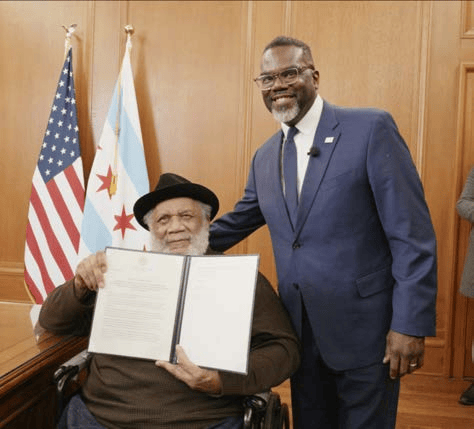
Chicago, January 31: Chapman holding Johnson’s executive order asking cops to investigate ICE crimes. These same cops repress black and brown people and anti-ICE protest. This is no step toward community control, it’s political theater. ICE, CPD will still terrorize immigrants.
Today, Johnson is widely hated and for good reason. He dumped migrants in black neighborhoods, straining limited resources. This set black and brown Chicagoans at one another’s throats. He laid off school staff in public schools starved of funds and raised taxes on working people already choking on inflation. He has not lifted a finger to stop rampant police terror or killings in black communities, like those of Dexter Reed and Timothy Glaze (a 58-year-old man shot 16 times in January 2025). Despite his anti-Trump rhetoric, Johnson let ICE freely rampage through the city’s Latino neighborhoods.
Building a real people’s movement would be greatly facilitated by not having to make excuses for the Chicago mayor or any other “black face in a high place” who stabs black people in the back. These career politicians bind the black community to the bourgeois establishment, sabotaging black struggle by keeping it within bounds acceptable to the country’s elite—the declared enemies of black community control.
The Power of Black and Red
Chapman says that the NAARPR’s strategy in the fight for community control of the police continues the legacy of the Black Panther Party. He does so in order to give a revolutionary stamp of approval, by associating the ECPS and other Democratic Party politicking campaigns with the Panthers. We have discussed above the NAARPR’s core strategy on its own merits. Here we turn to the legacy of the Panthers.
Of all the historical roots that Chapman identifies to make his approach to the CCOP struggle as attractive as possible, the Panthers appear on the surface to be the most immediate and direct. After all, by 1968 prominent Panthers like Bobby Seale, who Chapman quotes, explicitly called for CCOP through decentralization of police departments and putting them under the command of elected neighborhood councils. The Panthers, together with other left and rad-lib groups, even launched a referendum to implement this perspective in Berkeley, California, that narrowly lost in April 1971. But once again Chapman skips over inconvenient aspects of history.
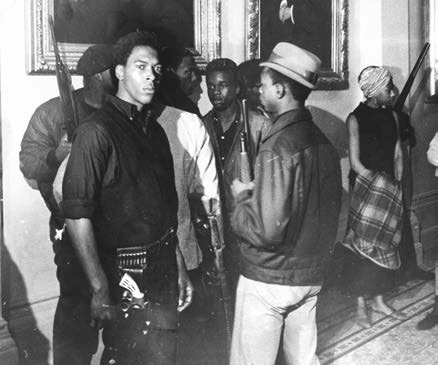
Lacking working-class perspective, BPP moved from armed self-defense to Democratic Party. Above: Black Panthers storm California Capitol with arms in hand to protest gun control legislation, 1967. Below: Chairman Bobby Seale campaigning as Democrat for Oakland mayor, April 1973.
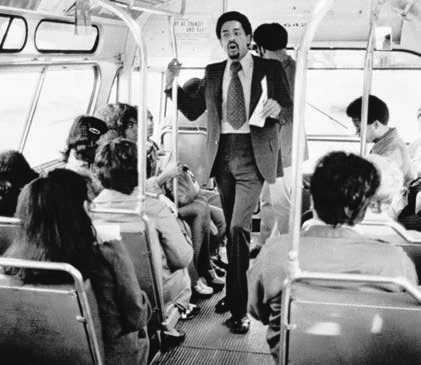
For a period of time after the Black Panthers first exploded on the scene in 1966, they struggled, in a contradictory way, to remain independent of the bourgeois establishment. The orientation reflected not only their militant nationalism but also a partial but significant leaning toward a class opposition to racist capitalist America. As a result, across the country they attracted to their ranks the most committed black freedom fighters of the era. On the one hand, the Panthers fought boldly in an entirely independent manner against the capitalist state—for example, their armed patrols to police the police in black neighborhoods. On the other hand, they did not have a program of proletarian revolution to sweep away that state.
In the case of the Panthers, the call for CCOP grew out of their armed neighborhood patrols. Despite their great courage and determination, though, they were pummeled by a massive wave of murderous state repression. At this point, the Panthers could turn in one of two directions—toward the bourgeois establishment or toward the multiracial working class—or go underground in isolation. Seale was a leading spokesman for the wing of the Panthers that went the first route and increasingly abandoned the organization’s independence from the establishment in pursuit of liberal schemes and alliances with Democrats. The Berkeley referendum campaign was an example of just that.
In short, Chapman is engaging in a sleight of hand—he is playing to the attractiveness of the Panthers at the height of their militant struggle against the state to dupe us into following a strategy born out of the defeat of that struggle and representing a coming to terms with the powers that be. In contrast to the Panthers, the NAARPR has never advocated any form of independent struggle against the state. Rather, it focuses entirely on the Democratic Party coalition-building. Such activity has never helped the revolutionary cause—at the time of the Panthers or today.
Things could have turned out very differently if the Panthers had turned toward the multiracial working class—the force that uniquely has the ability to take control from the capitalist state. Today, there is no less a need to anchor the black struggle in the working class. Otherwise, you will be crushed and defeated or drown in the bourgeois establishment. It comes down to strategy. Are you looking to fight for community control hand in hand with the liberals and the Democrats or are you looking to build independent organs of power?
White workers have no shortage of reasons to take up the CCOP struggle as their own. For any serious fight for their needs to succeed, they will have to take head-on the racial divisions and find ways to counter the forces of the capitalist state they come up against. Nowadays, those forces are running amok thanks to Trump and need to be stopped to give workers of all backgrounds some breathing space. White workers can be won to the broader fight for black liberation on the same basis: the struggle for their own interests, both immediate and historic, against the capitalist enemy will be qualitatively strengthened.
Neither the struggle for workers emancipation nor the struggle for black liberation can move forward without the other. As noted earlier, racial oppression is the preferred weapon of the ruling class to divide the working class and weaken its struggles. Both the Democrats and the Republicans are masters of the divide-and-conquer game. Right now, one part of the population blames the other part, and vice versa, for their worsening conditions. Very few blame those truly responsible: the U.S. capitalist class. For over a century and a half, the capitalist oppressors have been laughing all the way to the bank, as workers tear at one another for chump change.
To make matters worse, leftist groups have imbibed in all the liberal politics and parlance that are toxic to the unity of white workers and black people. Identity politics are especially corrosive. The only thing the left’s embrace of liberalism has achieved is to further alienate the working class. The FRSO, which calls to vote for black Democrats as a crucial part of the black liberation movement, is no exception.
If you are going to tell white workers to vote for a capitalist politician because he is an ally of the black struggle when they know he is going to screw them, you are playing with fire. Giving such advice is all but certain to end badly—in particular, to stoke racial animosity, turn workers off to the black struggle and discredit you in their eyes. It’s like telling them: “We don’t care if he screws you over. As long as it’s a black ‘progressive’ doing the screwing, it’s all good.”
What’s Needed Now
It is very ominous that federal agents are now blowing away white people in broad daylight without a second thought. As the saying goes, “When white folks catch a cold, black folks catch pneumonia.” Between Trump’s thugs and the local cops, there is a clear and present danger. Something needs to be done.
However, the reality is that the masses are not with us right now. For revolutionaries, our task is to bring them closer in a way that builds up their defenses and prepares their mobilization as an independent organized force. While it might seem a distant prospect at the moment, there are things we could do to advance the unity of the working class and oppressed against the capitalist state. We should work together in these areas to maximize our reach and potential impact and further discuss the best way forward.
To begin, we invite the FRSO, NAARPR and all other left groups to join the campaign to Open the Police Archives (OPA). This campaign is a means to rebuild the movement against racist cop terror along lines capable of establishing community control of the police. How so?
Without question, opening the police archives is in the interests of black people and white workers alike. Exposure of cop crimes and cover-ups, their torture methods and spying operations, would sharpen attitudes against the existing system, facilitate the fight for justice for the victims and provide vital information to improve our defense against future attacks. This campaign is readily supportable by all working people, making it a good vehicle to draw together isolated struggles on behalf of individual victims of cop terror into a common movement.
But that is not all. The OPA demand carries the potential not only to unite workers and black people, but also to separate them from two-faced politicians and officials who are lackeys of the bourgeois establishment even while claiming to stand with black people. These types talk a good game, only to abandon black people when it counts. Violating state secrecy does not go over well with the capitalist rulers. So, OPA is a tool to sort defenders of the black community from the fake talkers. All we have to do is put it to these officeholders: “You say you are on our side, so then open the police archives.” Their reaction will tell you everything you need to know.
That’s why we encourage the FRSO to take the OPA demand to Brandon Johnson, especially those members who remain unconvinced that he is not our ally in the struggle for CCOP. As the mayor, he has the keys to the city and is the commander-in-chief of the police department. If he wanted, he could have the archives opened overnight. We are under no illusion that he will ever even try to make this happen. But he very easily could—unless he was held back by allegiance to LaSalle Street and the country’s capitalist masters. Such a test of Johnson and similar figures would provide proof that workers and black people must rely on their own independent strength to effectively defend themselves and organize toward control of their communities.
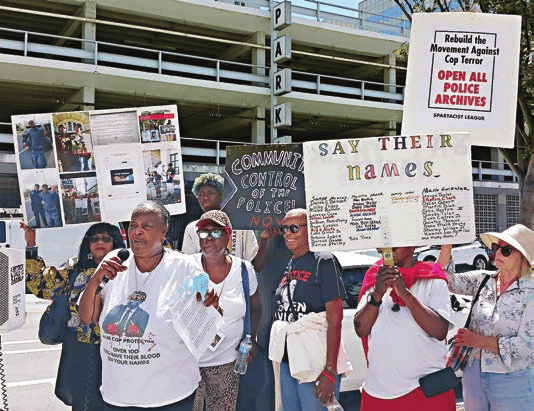
19 August 2025: Oakland rally demanding justice for Jalani Lovett, 27-year-old black man who died in L.A. County jail. We seek to rebuild the movement against cop terror around call to open the police archives.
For that reason, we take the OPA campaign into the unions: Their going on record in defense of black people against racist cop terror facilitates mobilizing the ranks to that end. The flexing of some union muscle in defense of besieged black and brown communities would be a big help right now. The unions themselves are direct targets of the racist purges, anti-immigrant crackdowns and other attacks in Trump’s America.
But their leaders have kept them in check, not wanting to fall out of favor of the bosses’ politicians. We must go to the ranks and provide them the tools to get the unions off their backs and into fighting shape. Collective union action, such as protest against racist cop terror, strike action to stop ICE or the organization of defense guards to protect immigrant and black families, would substantially improve our chances of beating back the current onslaught. It would also put us in a far better position to fight for real community control of the police and everything else going forward.
The OPA campaign has the potential to further the unity of workers and the oppressed, the unity of individual struggles for justice and independence from those loyal to the power structure. These are the very foundations on which the black community must stand to gain control of the police.