
https://iclfi.org/pubs/wh/2026-cuba-trip
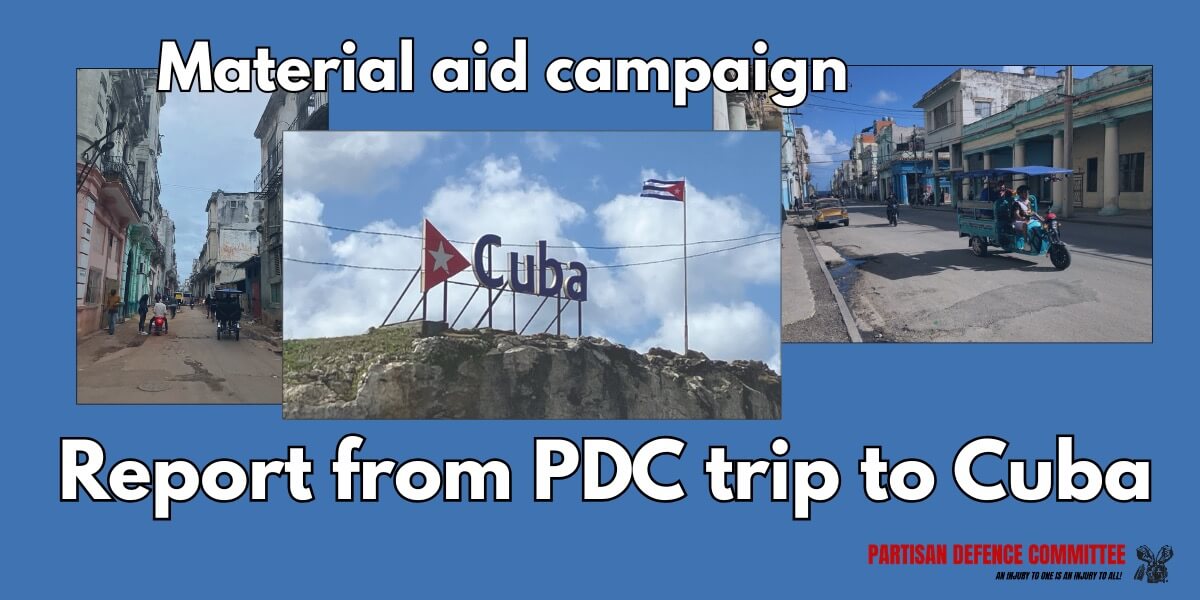
We print below a report by representatives of the Partisan Defence Committee/Britain who travelled to Cuba in late March to help bring urgently needed aid to the besieged island. Our comrades were among hundreds of activists who went to Cuba as part of the Nuestra América Flotilla.
We travelled to Havana to show our defence of Cuba against the imperialist strangulation of the only country in the Americas to have successfully overthrown capitalism. The Cuban Revolution expropriated the American imperialists and has been an inspiration to revolutionaries and the oppressed throughout the world. Now that Cuba is in desperate straits due to the US oil blockade, it is especially critical for the workers of the world and oppressed countries to stand in its defence against the declining American empire. The destruction of the revolution would further embolden the rampaging imperialists to unleash attacks against all of us. It is urgent to mobilise to break the blockade, and to demand that countries like Mexico resume and redouble oil shipments to Cuba.
The situation in the country is dire. Most of the population lacks adequate access to food, transportation and medicine. One of us had travelled to Cuba in 1993, shortly after the counterrevolution in the Soviet Union. He noted that while the situation was bad then, it is much worse today.
We arrived shortly after an island-wide blackout lasting 29 hours and in the four days we were there we experienced another blackout of about 24 hours, along with many shorter outages. The oil embargo even affects the ability to have fresh water, as electricity is needed to pump water from the basement cisterns to the rooftops. The lack of electricity also affects access to water on a city-wide level. The University of Havana, which has offered free education to students from all over the world for decades, has been shut down due to the blackouts. Food is available in private shops, but most people don’t have money to buy it.
We brought medical supplies to a large hospital near where we were staying. The hospital director came to greet us and the people we met were all grateful for the aid. We felt that the material we brought was a drop in the ocean, but the director said that while aid may be coming little by little, it really helps. He said many surgeries are impossible to perform due to lack of anaesthesia and antibiotics. Thousands are on a waiting list. The hospital was very modern, and we were told that the electric vehicles sent to Cuba by China are being used to ferry medical personnel to their jobs. However, while doctors are plentiful there is a severe shortage of supplies and even the medical machinery that is working doesn’t function without electricity.
We met a man who had travelled to Havana from the countryside. We heard that the situation there is even worse in terms of electricity, but some people are able to grow food. The man had already lost one leg and his other one was infected. He said he needed money, not for food, but to buy antibiotics from the black market before doctors could treat his leg. It was a huge contradiction. This man, who speaks seven languages, was proud of the education he was able to have in Cuba, yet he was suffering greatly due to the lack of healthcare.
The need to buy medicine on the black market in dollars before getting care is a problem for the broader population. We met a woman with a swollen neck whose husband was playing street music to earn money for her medical treatment. They said she was unable to even get a diagnosis. She needs a biopsy to see if she has cancer or if it is a thyroid condition, but this cannot happen until they can buy materials in US dollars.
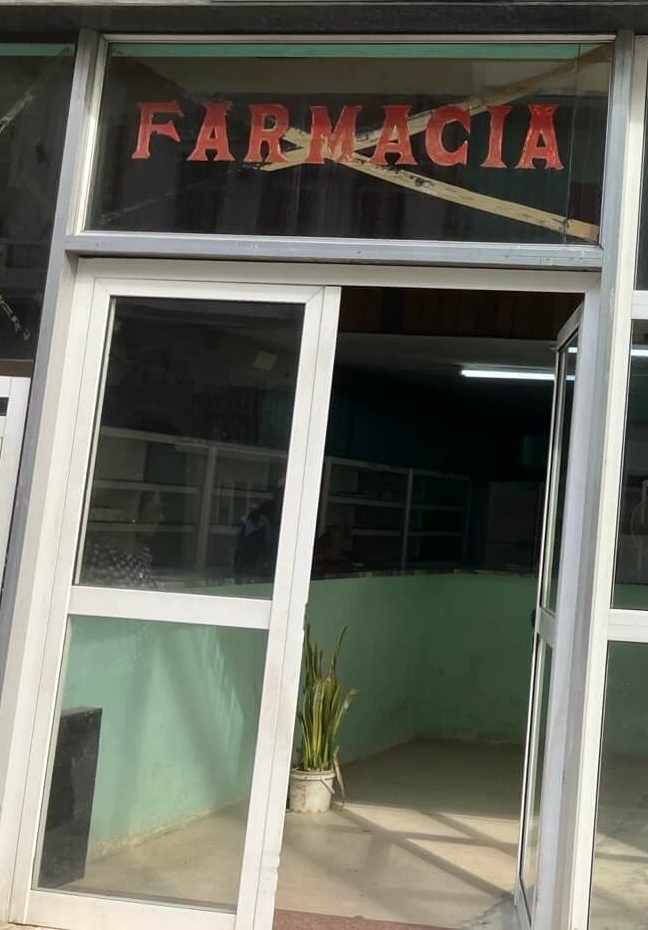
Pharmacy shelves are empty due to US blockade
The Cubans we spoke with are proud of the medical advances on the island, including the fact that they developed two effective Covid-19 vaccines very quickly. Cuba also has a famously extensive and successful vaccination programme for childhood diseases. Yet all the gains in healthcare and education are under immediate threat.
We met a man who served with the Cuban military in Angola, helping to defend the country against the South African apartheid-backed forces. We told him he was a hero. He also told us a historical fact affecting the energy crisis today. He said the Soviet Union had built a nuclear power plant on the island, which was almost completed at the time of the counterrevolution. Cuba was only missing the nuclear reactors. But Yeltsin, at the behest of US president Bush, cut off any further construction, so it is inoperable.
Social inequality and the tourism economy
While capitalism was overthrown in Cuba, the notion you can have socialism on one small island is a myth propagated by the Stalinist bureaucracy running the Cuban government. However, unlike in 1993 there were not even any billboards talking about socialism. Socialism has to be based on abundance, not dire poverty and inequality.
The Cuban government ploughed large amounts of the island’s scarce resources into the tourist industry, which collapsed during the pandemic and has not recovered, primarily due to US sanctions. A series of currency reforms heightened the economic collapse. Private shops multiplied and the island-wide blackouts began. There are many enormous luxury hotels financed by Spanish and other European capitalists, many of which were standing empty next to vast, sprawling impoverished neighbourhoods.
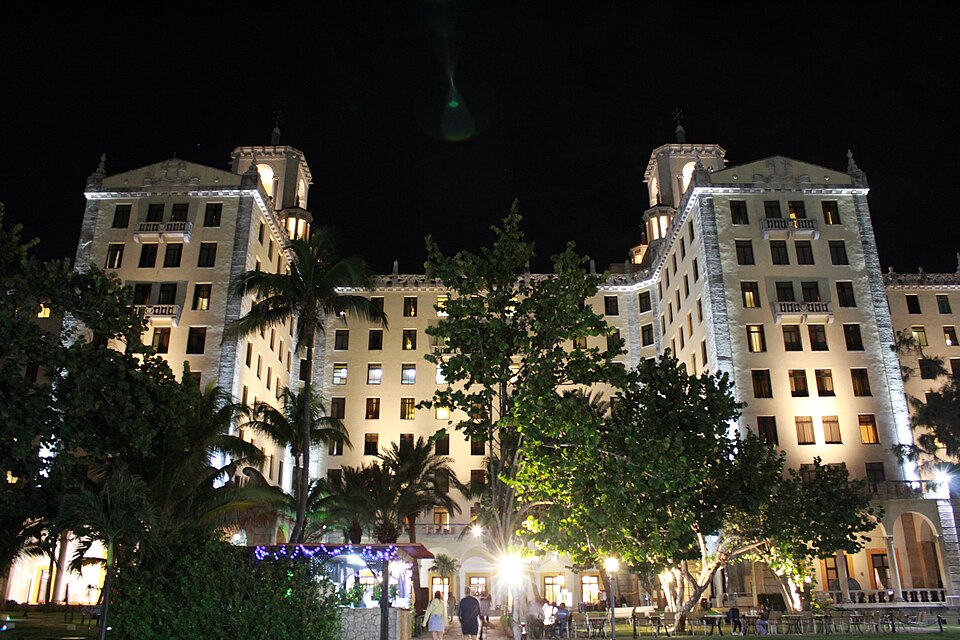
Fancy hotels like the National Hotel in Havana (above) coexist with widespread poverty.
The National Hotel was one older hotel that was still full and brightly lit, even during the blackouts. We visited to have a drink the last night and saw that many from the Nuestra América delegation were staying there. (We stayed in a small family-run casa particular.) A Cuban band was playing and they had a full bar where drinks could only be purchased with US dollars. It was a scene you find in many other oppressed countries, with a luxury resort standing in stark contrast to the reality outside. But in Cuba this is called socialism.
Given the dire economic and social situation, we encountered mixed feelings among Cubans about defending the revolution. One man we asked said he would definitely defend it from the US if it invades, but thought many others would not. He worried that the US was trying to provoke a civil war.
While many in the older generation who have memories of better times are supporters of the Cuban Revolution and stand in its defence, the material conditions younger people have grown up under mean many of them have different ideas. One young person who heard that we were there to defend the revolution challenged us to live in Cuba for a year to see if we felt the same way. Another told us his girlfriend wants the US to invade. Close to two million young people have left the island, mainly due to the ever-worsening economic situation, and the increasing inequality is undermining the revolution.
Among the people we spoke to, some were infuriated about the 32 Cubans who were killed by US forces in Venezuela. There was also fear about the inequality and poverty that is leading to anger against the government among so many people. One woman was worried that during the blackout, the cacerolazos (pot-banging) protests against the government would start up again and things might get ugly.
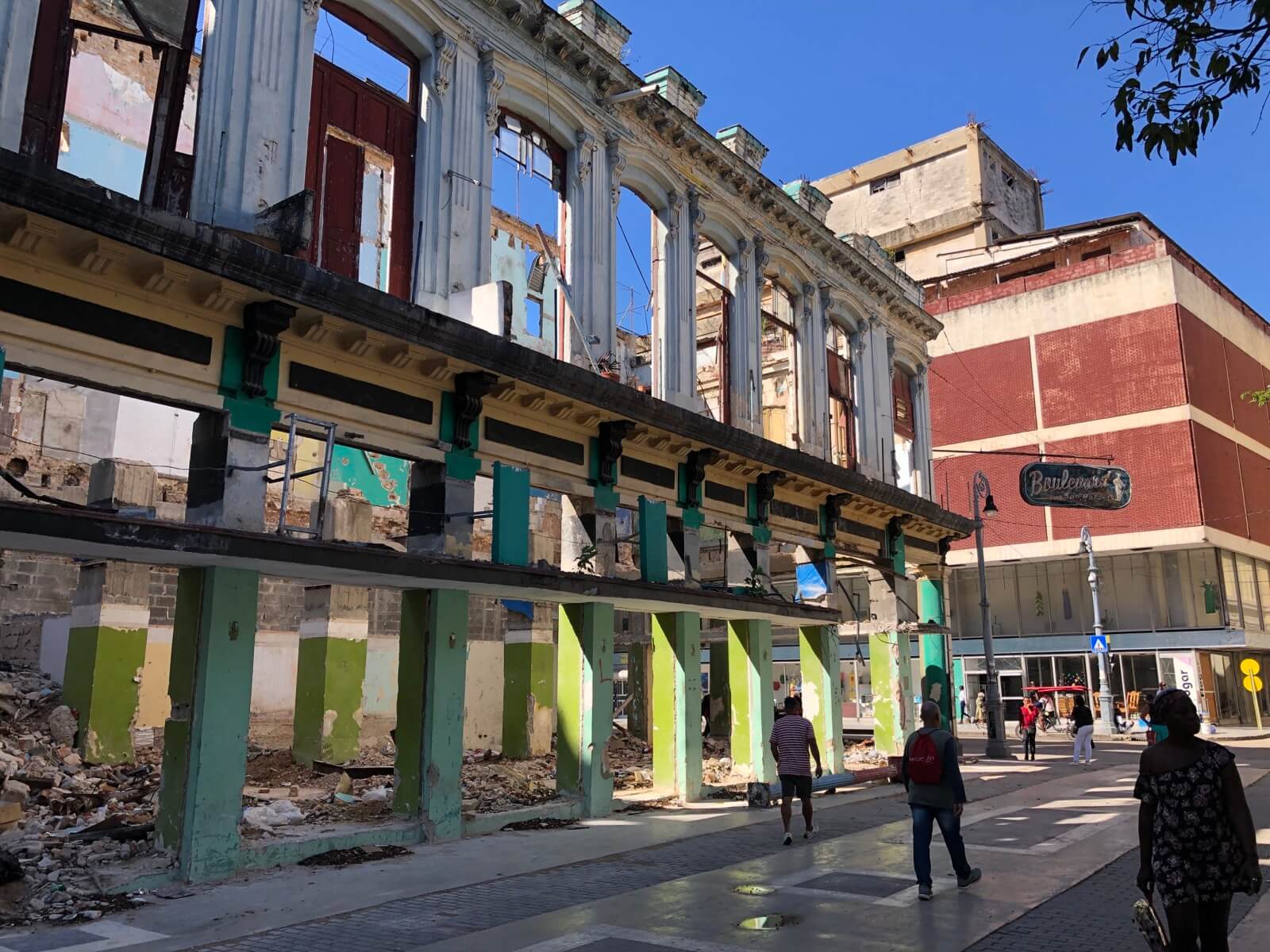
Crumbling buildings are a common sight in Havana.
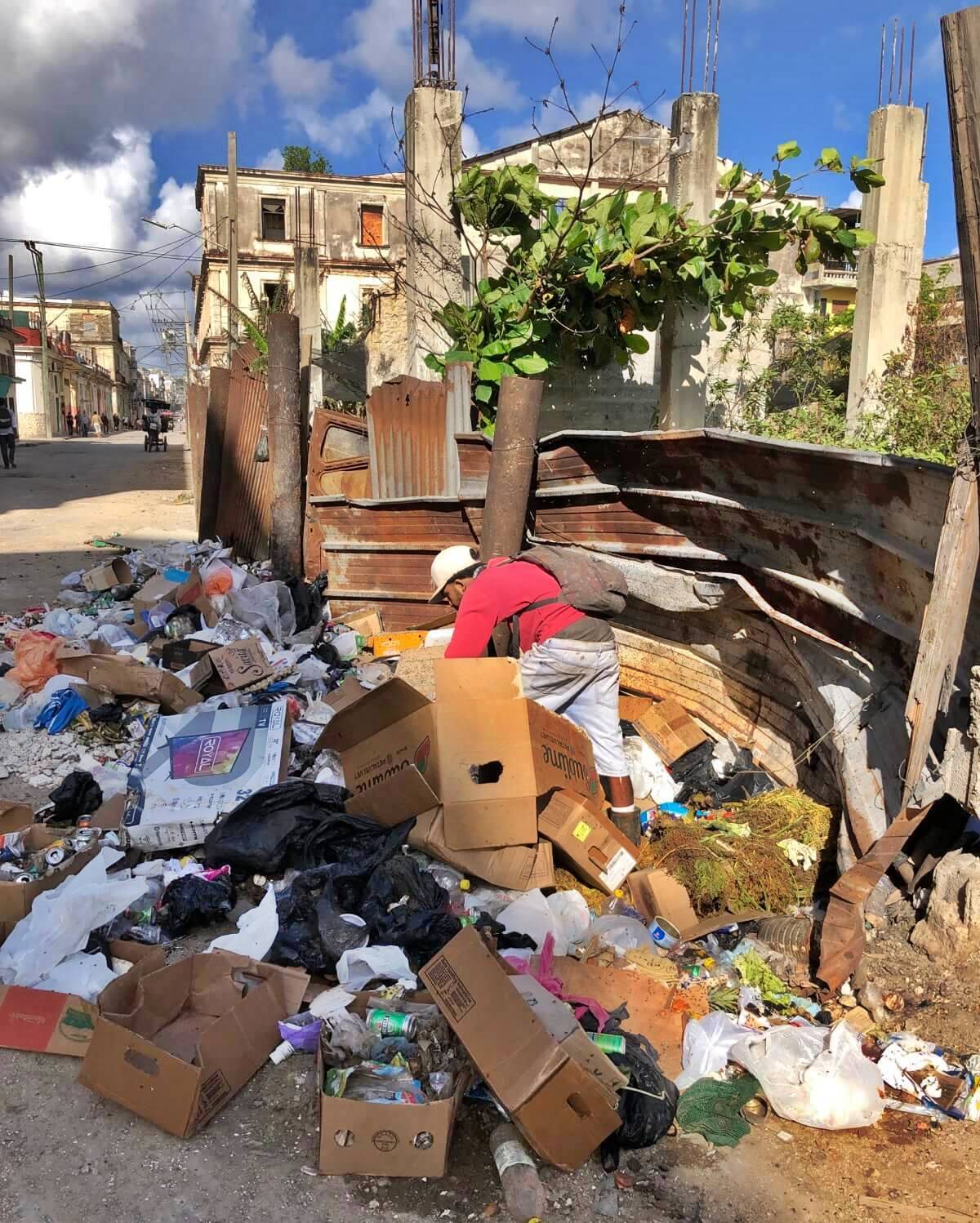
While some hotels, government buildings, hospitals and churches are new and well maintained, most of the housing and stores are decrepit. One building looked like it had been hit by an earthquake or bomb, but people told us it had just crumbled in on itself, killing two people and injuring seven others. There is a lot of anger at the government, and some people even claimed that there was no blockade of the island, it’s just an excuse used by the government. We also heard from a couple of women that there is a lot of repression, and you need to be careful who you speak to or you can end up in jail.
The government is currently negotiating with Trump. No one really knows what is going on in the Cuba-US talks, though some have dangerous illusions that there can be a good deal from Trump.
Liberalism v anti-imperialist struggle
The Nuestra América Flotilla was a united-front action by a coalition of groups that brought many tons of much needed aid to Cuba in defence of the island against US imperialism. It brought together people from around 40 countries including Colombia, Türkiye, Germany, Mexico, Ireland, Britain, the US and more.
The PDC had registered with Nuestra América, but when we arrived we found that we had been excluded from two major events. One was an enormous meeting where Cuban president Díaz-Canel addressed the crowd. Another was an address by local Cuban officials. We did go to the end of this event and handed over the rest of the aid we had brought with us. A number of people with whom we had collaborated in united-front actions in Germany and Britain, such as the Revolutionary Communist Group, were very excited to see us. We distributed hundreds of PDC flyers and gave out and sold Spartacist and El Antiimperialista both there and later at a Kneecap concert. Numerous celebrities were also involved, such as Jeremy Corbyn and Greta Thunberg (though we didn’t see them). We were the only left group openly distributing literature.
We were never informed why the PDC was excluded from the official events, but the reason was clearly political. Overwhelmingly, the Nuestra América participants were liberal humanitarian types or leftists who uncritically support the Cuban regime, while our Trotskyist politics, rooted in mobilising the working class internationally for anti-imperialist struggle, point a very different way forward.
The liberal and pacifist nature of the crowd was exemplified by Code Pink, a group that chartered a jet to Cuba. They generally think that it’s possible to stop Trump and US imperialism with peace and love. Two ships also sailed from Mexico bringing aid. At one point it was believed they were lost at sea, but fortunately they arrived intact. A spokesman for the Martin Luther King Jr Center on one of the boats was quoted in the Mexican paper La Jornada saying he wants to combine socialism with Christian love. Meanwhile, many of the leftists involved call Cuba socialist. Given the huge inequalities on the island, this only gives socialism a bad name.
From them you get no sense that defence of the Cuban Revolution will require hard struggle, in which the working class in the US and elsewhere will need to be mobilised with the understanding that defence of Cuba and anti-imperialism generally is in their own material interest. A revolutionary government in Cuba would appeal to the proletariat of other countries to mobilise in Cuba’s defence. That said, it did take courage for these mainly young people to defy the US blockade and bring aid to Cuba.
The US behemoth and defence of Cuba
It was clear when walking the streets of Havana that many people were not working. We heard that most factories are closed and that the minority that are open only operate four hours a day, during the mornings when electricity is more often available. Even when people are working, it is very difficult to feed themselves and their families on their wages. A university professor told us she was only paid $10 a month, and it costs $3 for cooking oil. A lot of people were begging and hustling, seeking money for food and medicine.
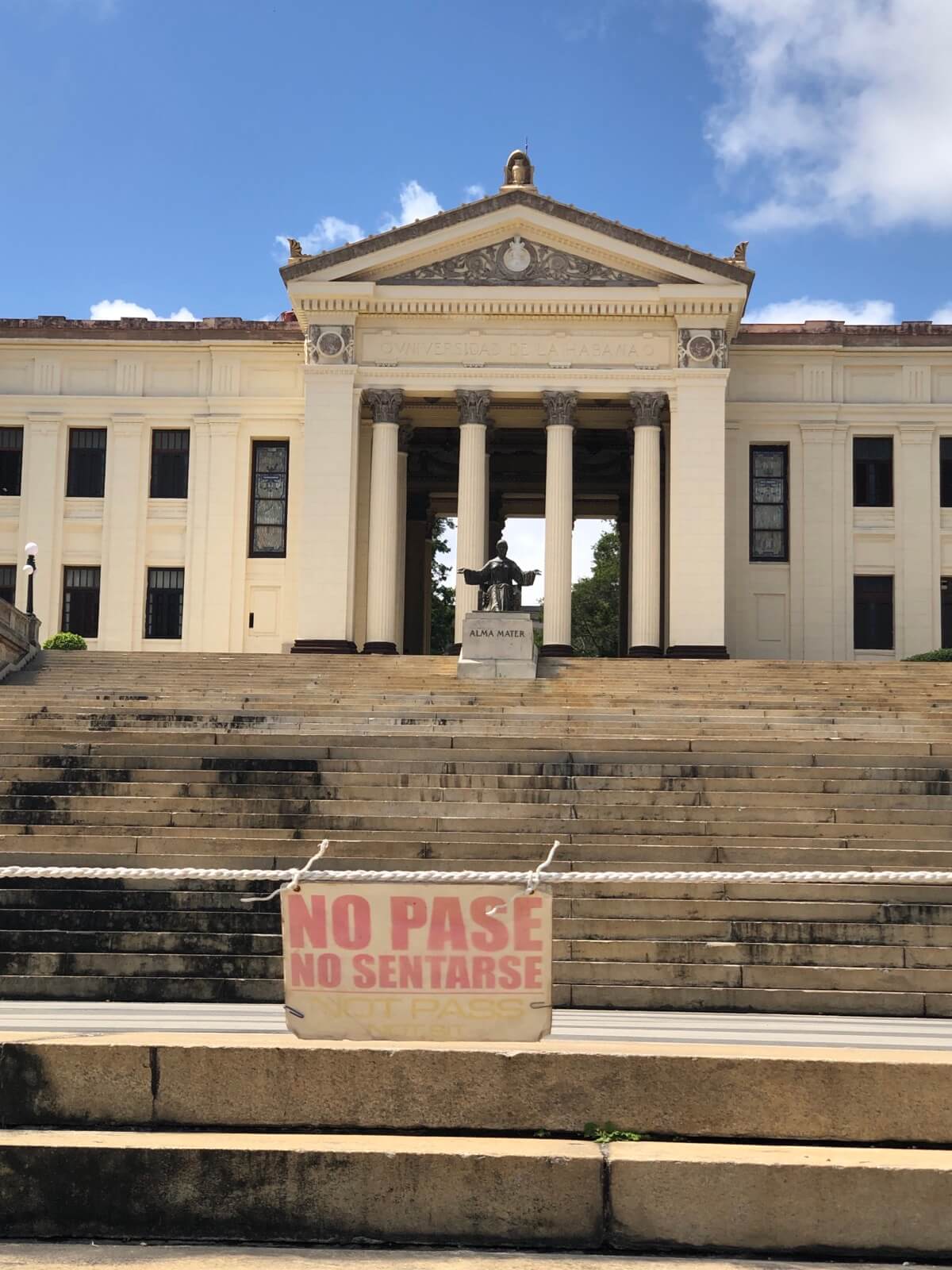
The University of Havana is shut due to power cuts
We heard different stories about whether the schools were open or not. Many were clearly in operation for children, but we were told that teachers’ salaries were not enough to buy food. People had ration books for government stores, but these were virtually empty and one ration book we saw appeared to be practically unused. But there were numerous private stores containing food with prices way higher than many could afford. When people see the prices in these shops they are infuriated. Some complained to us that on top of rent, the government takes a cut of the proceeds and setting up a business involves bribes. It was obvious that side jobs and hustles are necessary to survive, and unemployment seemed to be rampant.
We made points about China having a particular duty to aid the Cuban Revolution, for example by rebuilding infrastructure. Many people were dubious about this. Some were hesitant to criticise China because they were grateful for what they had received from the country, but there was a lot of distrust. One said that China “acts in a business-like manner”.
However, there were two things in which Cubans had a lot of illusions: no one wanted to criticise Obama or Mexico. During the Obama years trade and tourism with Cuba opened up, resulting in many jobs and money coming to the island. It was difficult for people to see that this was a different imperialist tactic to work towards counterrevolution. It is of course necessary to oppose the suffocating, decades-long US embargo and Cuba should be able to engage in trade with other countries. But the heavy investment in tourism further heightened inequality and set the country up for disaster during the pandemic. Meanwhile, Obama instituted many sanctions against Venezuela, the country which until recently was the main supplier of oil to Cuba.
As for Mexico, the country had been supplying oil to Cuba for many decades up until 9 January this year. Cubans are deeply grateful for this and for the tons of food aid that has been delivered since then. But food aid is no substitute for oil in the current situation. During our trip there were continual rumours about a Russian ship bringing oil to Cuba. The dates kept changing but finally the ship did arrive after we left. This will have brought some breathing space, but only for a few weeks.
In Mexico, our call to break the oil blockade and double the deliveries is very popular with people. Even the newspaper La Jornada had editorials demanding the restart of oil deliveries to Cuba. Supporters of Mexican president Sheinbaum say that she had to capitulate to appease the imperialist behemoth. However, every capitulation to Trump and US imperialism only emboldens them to carry out further attacks. They have made it very clear that after Iran, Cuba is next, while issuing regular threats against Mexico. The oil workers of Pemex need to take things into their own hands and restart oil deliveries. They and other workers in Mexico are being crushed by imperialism and need to mobilise, not rely on the Mexican government.
It was very important that we travelled to Cuba at this critical juncture. It is clear that things cannot remain as they are and no one in Cuba seems to know what will happen next. One Cuban official claimed that everything will be much better in three years. Other bureaucrats we ran into seemed to be unfazed by the situation and very comfortable in their positions. This was reminiscent of the East German Stalinists who exuded optimism as the Berlin Wall fell.
The Cuban Revolution is in grave danger. Its gains are hanging by a thread. As declining US imperialism attempts to take us all down in order to save itself, the working class needs to unify, defend itself and take up the cause of the oppressed worldwide. Defence of Cuba’s revolution is a critical part of that fight, and it cannot be left in the hands of the liberal do-gooders or supporters of bureaucratic rule.