
https://iclfi.org/pubs/wh/2026-garvaghy-road
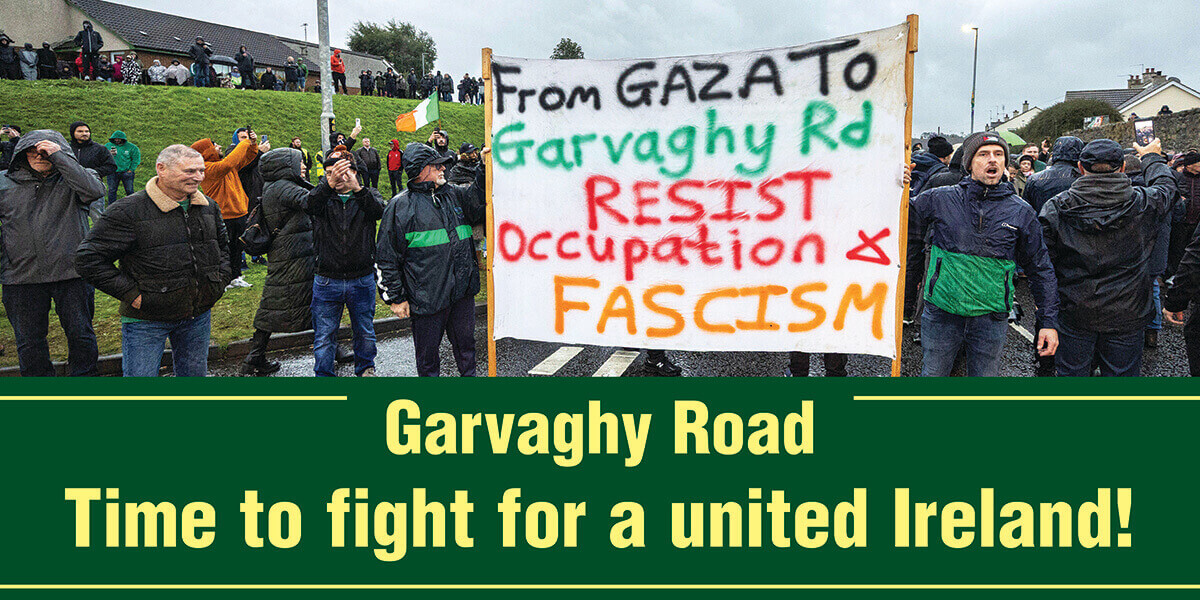
The courage and determination of the Garvaghy Road residents secured a victory by blocking the Orange Order from staging its provocative anti-Catholic hate march this past weekend. The Orangemen’s assertion of Protestant supremacy outraged the entire Catholic population and many Unionists as well.
“No going back” to the murderous violence of 30 years ago is the word on everybody’s lips, on Garvaghy Road and across Ireland. The determination also runs deep among Protestants, for good reason. Opposition to reigniting the sectarian conflict, which is the purpose of the Orange Order, crosses the communal divide. But to avoid going back to the past, we must understand that the crisis cannot be resolved within the terms of the Good Friday Agreement. British rule is the root cause of sectarian violence; the fight to end sectarian violence is inseparable from the struggle to end British rule.
Why now?
The status quo established by the 1998 Good Friday Agreement is unravelling. The generation of Catholics born since then refuses to be treated as second-class citizens, and a growing layer of young Protestants are repulsed by the sectarianism and bigotry—including misogyny—of the traditional Unionist parties. Many consider themselves Irish, or Northern Irish, and in the context where everyone expects a referendum on the border, many are open to supporting a united Ireland. The sentiment for unity must be channelled in a positive direction, towards a democratic socialist future, or it will inevitably be thrown back to the past.
The Orange Order’s stunt at Garvaghy Road is intended to dismantle the trappings of the Good Friday Agreement, by bringing down the hapless Stormont parliament and deposing its Sinn Féin first minister, Michelle O’Neill. Facing next year’s elections, the scandal-ridden Unionist parties desperately need to shore up their shrinking base. The Democratic Unionist Party’s former leader has been jailed on rape and sexual abuse charges, while reports of other atrocities, including assault against women, have surfaced among Unionist politicians. Moreover, the material basis for granting the marginal privileges to Protestants has been wiped out by deindustrialisation. The North’s economy is in a worse state than the rest of the UK, and while the South has plenty of problems, living standards there are higher than in the North. With the traditional Unionist parties feeling the ground slipping from under them, poisonous anti-Catholic bigotry has become vital as a means of justifying their existence.
Forward or backwards?
The situation cannot stand still: if it is allowed to fester, the danger of a return to sectarian conflict will only increase. It would not take much to spark Loyalist violence, which would inevitably trigger republican retaliation, and the cycle that ended 30 years ago would begin again. It’s no use trying to resolve the problem of the Orange marches within the Good Friday Agreement. It accepts the legitimacy of British rule in the North and of the Orange state, designed to relegate Catholics to second-class citizens. There is simply no democratic solution within this framework. The only prospect for a lasting solution to the problem of sectarian violence is to fight for a socialist united Ireland.
Sinn Féin is clinging to the Good Friday Agreement, believing it offers a path to a united Ireland. That path means waiting for the British government to agree to give Ireland back the Six Counties. However, Sinn Fein’s liberal illusions are now being shattered: Andy Burnham has said categorically that a border poll is “off the table” and the Orangemen’s provocation at Garvaghy Road threatens to bring down the power-sharing assembly at Stormont. Neither the Parades Commission nor any other institution set up by the Good Friday Agreement can solve the problem, for the simple reason that the Agreement preserves British rule, which has always relied on the Orange Order and the Loyalist paramilitaries, the forces responsible for stoking murderous communalism.
Andy Burnham appeals for calm on “both sides” and ridiculously claims his government is neutral, although everyone knows that the British secretary of state has the last word in the negotiations about the Orange Order’s “right to march”. And, of course, Burnham is leaning on pro-imperialist lackey Micheál Martin, the Irish Taoiseach, to lean on Sinn Féin to rein in the Garvaghy Road protesters.
The British establishment is vehemently opposed to any move towards Irish unity, which would end their centuries-long hold on Ireland. The Orange Order has long been the chief instrument for maintaining British rule in Ireland. They came into existence to aid the British in crushing the United Irishmen, the first Irish republican movement, that was led by Presbyterians and supported by Catholics. Throughout history, the Orange Order has often lain dormant for years, only to come alive in opposition to any move towards unity between Protestants and Catholics. And so today they have emerged from relative obscurity to centre stage.
The struggle to achieve equality for Catholics and to end sectarian violence is inseparable from the struggle against British rule. Irish unity will take working-class struggle—North and South—against British imperialism and against the Irish ruling class, which serves the imperialists—British and American. The anger and determination that has been galvanised in defence of Garvaghy Road must be used to launch a militant campaign for Irish unity. In this struggle, socialists need to hammer home the point that only a perspective for a workers republic can overcome the sectarian divide, end national oppression and address the burning social needs North and South of the border.
This article also appeared in: